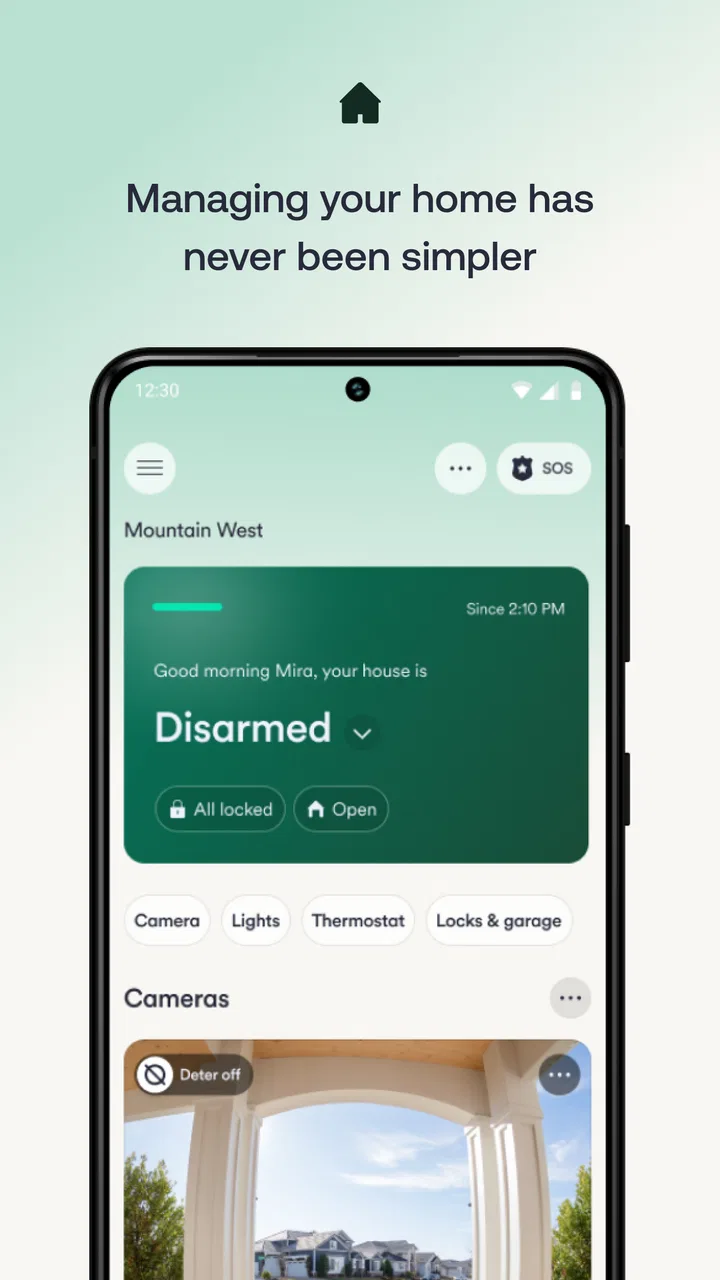
Vivint
- 4.3
- Rating
- 1.00M
- Installs
- Free
- Price

 Analysis by App-foxy
Vivint is the kind of house-and-home app I judge less by its welcome screen and more by what happens when I am carrying groceries, leaving in a hurry, or trying to check the house from somewhere else. Developed by Vivint Home, it is built for people who already use a Vivint smart-home setup and want a mobile control point rather than another separate remote for every device. I found that focus both useful and limiting: the app can make a connected home feel much easier to manage, but its value depends heavily on the Vivint equipment and service around it.
The app is free to install and is rated for Everyone, which makes the basic download approachable for a household with different ages and levels of technical confidence. Its category is House & Home, and that description fits better than calling it a general-purpose home automation tool. It feels centered on supervising and controlling a Vivint environment, not on replacing every smart-home platform in existence. That distinction matters before you spend time setting it up.
How Vivint feels when the home depends on a connection
My first practical impression is that connectivity is not a background detail here; it is part of the experience. When the phone, the home equipment, and the service can communicate normally, the app gives me a convenient way to see what is happening without walking from room to room. I can make a quick check while away, respond to a situation, or use the app as a single place for the Vivint system rather than remembering several device-specific controls.
You May Also Like

 Blood Strike: 2.5 Anniversary
Blood Strike’s Loadouts Turn Every Drop Into a Tactical Gamble
A close look at Blood Strike’s custom loadouts: how fast access to signature weapons reshapes its battle royale rhythm, rewards preparation, and narrows the gap between fights.

 Pandora - Music & Podcasts
Pandora’s Music Is Easy to Start, but Harder to Recover
Pandora’s strength is its low-effort path from a seed to a station. Its weak spot is how much confidence it asks you to place in connection, setup, and quiet recovery.

 8 Ball Pool
 Is Built on Rivalries, Rematches, and Routine
A close look at the rivalries, rematches, shared routines, and unanswered safety questions that turn a quick pool match into a persistent mobile community.

 Samsung Music
’s Quiet Strength Is Playing What You Already Own
Its reach comes less from spectacle than from dependable access to a personal library. That simplicity is both the app’s strongest retention engine and its ceiling.

 AccuWeather: Weather Radar
AccuWeather Review: A Quick, Clear Forecast for Everyday Decisions
For everyday plans, the best forecast is the one you can understand quickly. AccuWeather makes rain timing, radar, and local conditions easy to act on, with a few trade-offs.

 Hill Climb Racing
Why Hill Climb Racing Still Turns Crashes Into One More Run
A tiny car, a bumpy hill and one more upgrade: Hill Climb Racing keeps resurfacing because its simple chaos makes every near-miss feel personal.
More From Our News Desk
View All News


That convenience becomes most obvious during small transitions. Before leaving, I prefer a short visual check over opening multiple controls and wondering whether I remembered everything. When arriving home, having the phone involved can reduce the number of steps between noticing the house and handling the next action. These are not dramatic features on their own, but repeated moments are where a smart-home app earns its place.
The trade-off is that a command sent through a phone is not the same as a command made directly at home. A weak mobile connection, a busy home network, or a device that has not responded can introduce uncertainty. I learned to treat a delayed screen as a reason to verify the result rather than repeatedly tapping the same control. For anything security-sensitive, confirmation matters more than speed.
A realistic example is leaving for work while already running late. I can use the app to review the Vivint setup from the driveway or from the first stop on my route instead of turning around immediately. If the response takes longer than expected, I would not assume that a second tap fixed the issue. I would wait for a clear state change and, when the situation matters, check another way. That habit is more valuable than simply knowing where the buttons are.
What mobile control changes in everyday routines
The strongest use case is not showing off a connected home to visitors. It is reducing tiny interruptions. I can check the house while traveling, handle a routine action without being physically beside the equipment, and keep the household’s controls in one familiar app. For a family, that shared point can be easier than explaining several unrelated applications, especially when one person normally manages the home technology.
It is also useful for people whose routines change during the day. A late return, an unexpected delivery, or a quick check before bed can be handled from the phone rather than planned around being in a particular room. I like that the app’s purpose remains fairly clear: it is a remote relationship with the Vivint home, not a social feed or a crowded collection of unrelated services.
Still, I would not recommend it as a standalone download for someone who does not use Vivint equipment. The app’s usefulness is tied to that ecosystem, so a person comparing general smart-home controllers should first decide whether the Vivint environment is the right foundation. If the household already owns a mixture of brands and wants one neutral dashboard, a broader platform may be a better starting point.
Phone context also affects how comfortable the app is to use. A large, careful check at home is different from a glance while walking through a parking lot. I would avoid making important changes while distracted, and I would not use a quick notification or a partially loaded screen as proof that the physical situation is safe. The mobile advantage is access; it does not remove the need for judgement.
Handling delays, failed commands, and recovery
Connected-home software should be judged by its recovery behavior as much as its normal operation. With Vivint, my preferred workflow is simple: send one command, allow time for the system to respond, inspect the resulting state, and only then decide what to do next. This avoids the common mistake of issuing several contradictory commands because the first screen has not caught up.
If an action appears stuck, I would begin with the least disruptive checks: confirm that the phone has a usable connection, reopen the relevant view, and look for a current state rather than relying on the button press itself. If the home connection is the problem, moving to a different location with better mobile service may help me distinguish a phone-side issue from a home-side issue. That distinction saves time when contacting support or troubleshooting the equipment.
Recovery is especially important when more than one person uses the home. A family member may see a different state after another person has acted, and two people can easily work against each other if they do not pause to confirm what happened. I recommend agreeing on a simple household rule: the person who notices a problem checks the current state first, then tells others what action was actually completed. That is a small workflow, but it prevents duplicate commands and confusion.
I also prefer to test important routines at a calm time rather than discovering their weak points during an emergency. Try the normal mobile check from outside the house, observe how quickly the state updates, and learn what a completed action looks like. This does not guarantee that every future connection will behave identically, but it gives me a practical baseline and makes unusual delays easier to recognize.
One limitation is psychological rather than technical: remote control can create false confidence. A phone screen can tell me what the system reports, but I should not confuse that report with direct knowledge of every physical condition in the home. When a decision affects safety, I want an explicit confirmation and a backup plan. Vivint is most comfortable when used as a convenient control and monitoring layer, not as permission to stop paying attention.
Using the app while traveling or away from home
Travel is where a connected-home app proves whether it is genuinely useful. From another location, I value the ability to check in without asking someone nearby to perform every routine task. That can make a short trip less stressful, particularly when I want to confirm the household’s status after leaving in a rush.
At the same time, distance makes connectivity problems harder to interpret. If the app takes a while to update, I cannot immediately tell whether the home is busy, the phone has poor service, or the connection between the service and equipment needs attention. I would avoid making repeated changes from an airport queue or a moving vehicle. Waiting until I can concentrate is safer and usually faster than trying to troubleshoot through a rushed sequence of taps.
For a household that shares responsibility, the app can also reduce dependence on one person’s memory. Someone else can perform a check or manage a routine when the usual administrator is unavailable. That benefit depends on sensible account and device habits, though. I would only give access to people I trust, and I would make sure everyone understands that a visible status is time-sensitive rather than permanent.
Connectivity also shapes battery and attention in less obvious ways. A person who repeatedly opens the app to refresh a delayed state may spend more time and phone power than expected. My advice is to use deliberate checks: open it for a specific reason, wait for the current information, act once, and close it when the task is complete. That keeps the app from becoming a nervous habit.
Privacy-minded and data-conscious habits
A smart-home app naturally deals with information about the home, routines, and activity. Even without turning the experience into a technical audit, I think users should approach it with the same care they would give any app connected to their household. Keep the phone protected, avoid leaving an unlocked device where visitors can use it, and think carefully about who needs access.
I would also separate convenience from necessity. If I only need to perform one routine check, there is no reason to keep reopening the app throughout the day. Fewer unnecessary interactions make the experience calmer and reduce the chance of acting on an old screen. This is particularly useful for people who monitor their home while traveling and may otherwise keep checking simply because the information is available.
Notifications deserve attention too. I prefer to decide which alerts are genuinely useful in my daily life and which ones would become background noise. Too many interruptions can make an important message easier to overlook. A good setup is not the one that speaks most often; it is the one that helps me notice the information that changes what I should do.
There is another practical privacy trade-off in shared homes. A single app can simplify control, but it also concentrates responsibility. If everyone uses the same phone or account casually, it becomes harder to know who changed something and why. Clear household roles, protected devices, and a habit of communicating important changes are more effective than assuming the app alone will prevent misunderstandings.
Who will get the most from Vivint
I see the best fit in a person or family already committed to Vivint’s connected-home ecosystem. For that audience, the app can replace scattered controls with one mobile experience and make remote checks part of ordinary routines. It is especially appealing if you travel, have changing schedules, or want a less intimidating way for several household members to interact with the system.
It also suits people who appreciate convenience but are willing to verify important actions. The app rewards a measured approach: check the current state, make a deliberate change, and confirm the result. Users who understand that a networked command may take time will have a better experience than users who expect every tap to behave like a physical switch.
I would be more cautious about recommending it to someone shopping for a brand-neutral smart-home hub. If your home contains equipment from many manufacturers and your main goal is broad compatibility, a platform designed around multiple ecosystems may offer a better match. Vivint makes more sense when the surrounding Vivint setup is already the central decision.
It is also not ideal for somebody who dislikes remote access, notifications, or the responsibility of managing a connected household. The app can simplify control, but it does not eliminate maintenance, attention, or the need to understand what the system is reporting. A traditional local control may feel more reassuring for a user who wants fewer network-dependent steps.
Version, availability, and the overall value
Vivint has been available since March 3, 2014, and the current release is version 26.3.100. It requires iOS or Android 12 or later, so I would check the phone’s operating system before planning a setup on an older device. The app itself costs nothing to download, but the meaningful question is the value of the connected Vivint environment rather than the price of the app alone.
Its audience is substantial: the app has passed one million installs, with an average rating of 4.3 from about 153 thousand ratings and around 47 thousand written reviews. Those figures suggest that many people find the mobile experience useful, but they should not replace a personal compatibility check. A popular app can still be the wrong choice if your home is not built around the same ecosystem or if your network habits make remote control frustrating.
In day-to-day use, I appreciate the clear purpose and the ability to carry the home’s controls with me. I am less enthusiastic about the uncertainty that appears whenever a command, status update, or notification depends on several connections working together. The app is at its best when I use it intentionally and confirm meaningful changes; it is less satisfying when I expect instant certainty from every interaction.
My connectivity verdict
Vivint is a worthwhile mobile companion for an existing Vivint smart home, particularly if remote checks and flexible routines are important to you. I would recommend it to a friend who wants one familiar way to stay connected with the house and is comfortable learning a careful confirmation workflow.
My main advice is to test the moments that matter before relying on them: check the home from outside, observe how state changes appear, try a normal recovery step after a delay, and decide which notifications deserve your attention. Those habits reveal more than a quick tour of the interface.
The best reason to use Vivint is dependable access to a Vivint home, not the promise of effortless control in every situation. If that ecosystem matches your equipment and expectations, the app can turn occasional household uncertainty into a quick, manageable check. If you want a universal controller or prefer controls that do not depend on connectivity, I would look elsewhere rather than forcing this app into a role it was not designed to fill.
After using it in that narrower but realistic role, I consider it a practical House & Home app with a clear audience. Vivint does not make connectivity invisible, but it makes the connected-home relationship easier to carry through a busy day. That is enough to make it useful, provided you treat network delays seriously, protect access to the app, and verify important results instead of assuming that a tap alone settled the matter.
FAQs for Vivint
01What is Vivint, and how does it work?
Vivint is a smart home automation app that integrates with a variety of home devices to provide enhanced security and convenience. Users can control lights, thermostats, locks, cameras, and security systems remotely via their smartphone. The app offers real-time alerts and allows for seamless integration with other smart home technologies.
02Is Vivint compatible with all smart home devices?
Vivint is compatible with a wide range of smart home devices, but it may not work with every brand or model. It is designed to integrate smoothly with its own line of products and selected third-party devices. It’s important to check compatibility on the Vivint website or consult with their customer service before purchasing new devices.
03How secure is the Vivint app?
The Vivint app employs advanced encryption protocols to ensure user data is protected. Regular security updates are rolled out to patch vulnerabilities and enhance security. Additionally, the app requires multi-factor authentication to prevent unauthorized access, making it a reliable choice for safeguarding your smart home system.
04Can I use Vivint if I live in an apartment?
Yes, Vivint can be used in apartments, but some features might require landlord approval, especially those involving installation of devices like cameras or security systems. Portable options are available that do not require permanent installation, making it feasible for renters to take advantage of smart home automation.
05What customer support options does Vivint offer?
Vivint provides a variety of customer support options, including 24/7 phone support, online chat, and a comprehensive help center with articles and tutorials. Users can also schedule professional consultations to optimize their home setup. Customer service is highly rated for its responsiveness and effectiveness in resolving issues.
Pros
- User-friendly interface for easy navigation.
- Comprehensive security features included.
- Real-time alerts keep you informed.
- Customizable smart home options.
- 24/7 customer support available.
Cons
- Subscription required for full features.
- Initial setup can be time-consuming.
- Limited compatibility with some devices.
- Higher cost compared to competitors.
- Occasional connectivity issues.

Vivint
Gallery